
RPM, engine temperature & more: How CUMPAN can be used on any internal combustion engine
Using the CUMPAN Universal as an example, this article explains under which technical conditions the system can be used on internal combustion engines of various designs. The focus is on measurement parameters such as engine speed, engine temperature and other engine data, as well as the fundamental principles behind their acquisition – independent of vehicle type or manufacturer. While concrete installation examples and vehicle-specific guides already exist for many vehicles, this article is deliberately aimed at those for whom no documented solution is yet available and explains the technical background of the individual measurement functions. The described principles apply to 2-stroke and 4-stroke engines, single- and multi-cylinder configurations as well as to gasoline and diesel engines – ranging from motorcycles and passenger cars to commercial vehicles and comparable applications.
General principles
The CUMPAN was developed for use on internal combustion engines and serves as a central display instrument for monitoring relevant engine data. It enables, among other things, the display of engine speed, temperatures, shift light, gear, oil pressure, as well as lambda or AFR values – depending on the connected sensors.
Which measurement values can ultimately be displayed depends on the existing vehicle technology and the available signals on the one hand, and on which additional sensors can be installed on the other, for example for temperature or pressure measurements.
12V power supply
A stable 12V supply is the basic requirement for operating the CUMPAN. The power supply should be connected to a switched and fused circuit (terminal 15) so that the device is only powered when the ignition is switched on. A direct connection to permanent positive can lead to unwanted battery drain and is therefore not recommended. It is also important to ensure a sufficiently fused power source in order to reliably protect both the vehicle electrical system and the connected device.
Depending on the vehicle, different options are available for tapping a switched 12V line. Often, preinstalled connections for auxiliary consumers are already present. Alternatively, fuse taps or suitable splice connectors can be used. Typical connection points and examples of switched 12V lines are summarized in a separate guide: Connection to a switched 12V supply (PDF)


Engine speed display
The engine speed signal is usually obtained from the crankshaft position sensor. This sensor is present on internal combustion engines with electronic ignition, as its signal is required to determine the ignition timing and – depending on the engine concept – also for fuel injection. The crankshaft position sensor is typically located near the crankshaft or flywheel, often in the form of a pulse generator.
In most cases, this is an inductive sensor with two wires (signal and ground). Less commonly, Hall sensors with three wires are used, which additionally require a power supply. The relevant engine speed signal can be identified using wiring diagrams, through electrical measurements, or by analyzing the signal characteristics at the device’s engine speed input.
Direct acquisition of the engine speed signal at the crankshaft position sensor is significantly more precise and less susceptible to interference than indirect, inductive pickup at the ignition cable. Helpful for locating the crankshaft position sensor are technical exploded drawings, as documented in publicly accessible vehicle databases, for example at en.microfiches.net.


Shift light
The shift light is a display function that provides a visual indication on the display when a defined engine speed threshold is reached. It can be used both as a warning against excessive engine speed and as an indicator for an optimal shift point. The shift light function operates purely on signal input and is not tied to vehicle-specific components. The only requirement is a valid engine speed signal, allowing this function to be used independently of vehicle type.
In addition, the shift light can be linked to engine temperature. This makes it possible to define a temperature-dependent engine speed threshold, for example to support reduced-rpm warm-up of the engine. The shift light can therefore activate at a lower engine speed when the engine temperature is low and gradually release the permissible speed range as the temperature increases. The corresponding engine speed threshold as a function of engine temperature is freely configurable.
Example: At an engine temperature below 60 °C, the shift light may activate at 4,500 rpm. Once the engine temperature reaches 60 °C, the warning threshold is raised to 7,500 rpm. If no temperature-dependent warning is desired, the shift light can alternatively be set to the maximum permissible engine speed and thus remain inactive during normal riding or driving.
Engine temperature
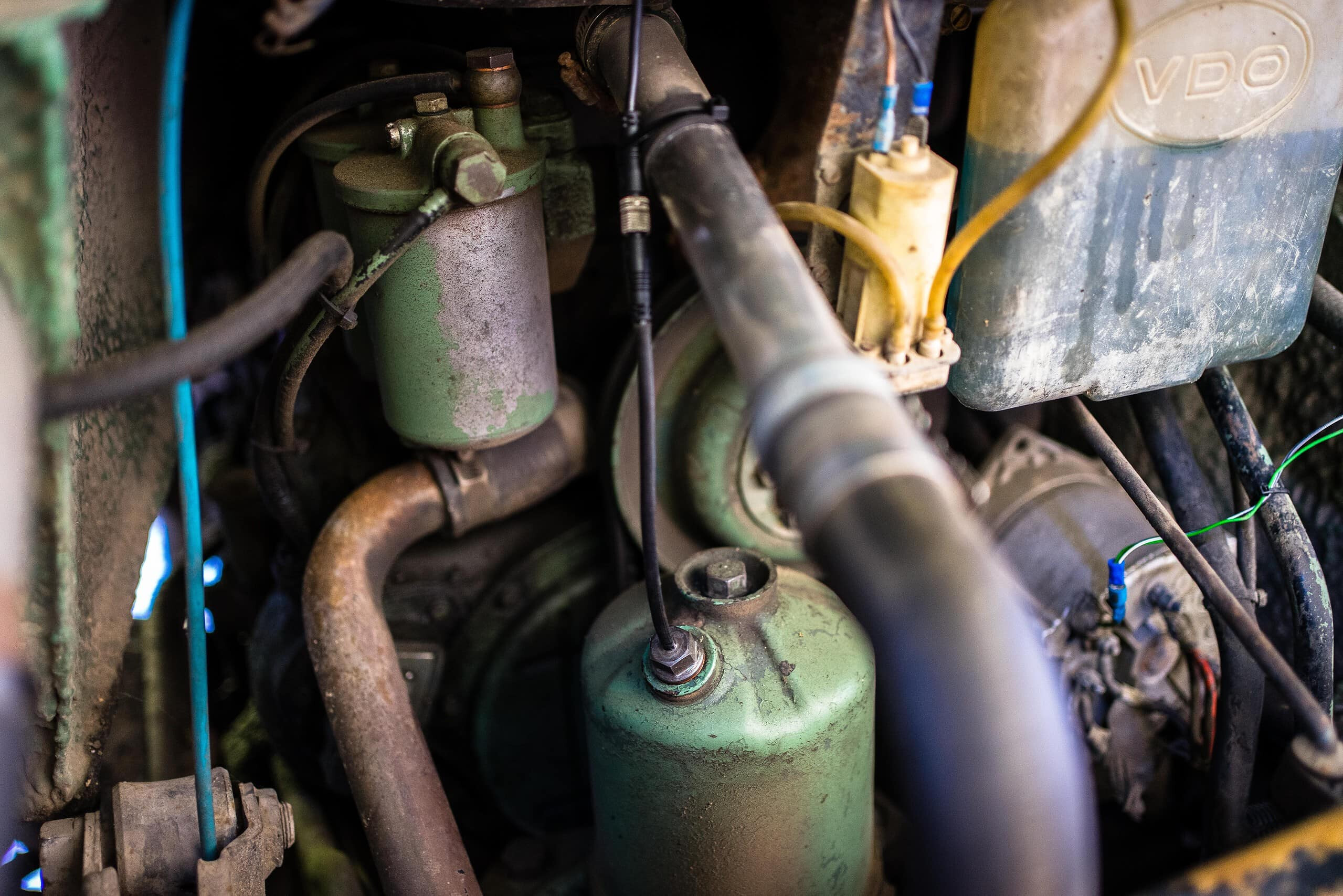
Engine temperature is one of the most important measurement values for assessing the operating condition of an internal combustion engine. It provides early indications of thermal overload, insufficient lubrication, or cooling issues and is a key factor in selecting an appropriate engine speed. To measure oil or coolant temperature, a sensor is installed in a component that is in direct contact with the respective medium. Many engines already provide blanking plugs, service ports, or unused threaded holes that are suitable for this purpose.
An overview of available temperature sensors in various designs and thread sizes can be found on the temperature sensor product page .
Oil or coolant temperature – which measurement value is useful?
Coolant generally reacts more quickly to temperature changes than engine oil. As a result, coolant temperature often reaches its normal operating range while the engine block and oil are not yet fully warmed up. Overheating of engine oil, on the other hand, is significantly more critical, as it can lead to oil film breakdown, accelerated wear, or thermal overload of seals and bearings. For this reason, oil temperature is a particularly meaningful indicator of the engine’s actual thermal condition.
Ideally, both temperatures are monitored. However, since most liquid-cooled engines already feature a factory-installed coolant temperature monitoring system, in many cases it makes sense to additionally monitor oil temperature. For air-cooled or air-oil-cooled engines, this distinction does not apply, as oil temperature is the only relevant measurement value available.


Ambient temperature
Ambient temperature is always recorded. For this purpose, a temperature sensor is integrated directly into the device as standard. Whether ambient temperature is shown in the selected display layout depends on the chosen configuration. The temperature unit can be switched between Celsius and Fahrenheit. Depending on the device’s position, the displayed ambient temperature may be influenced by rising engine heat when stationary or at low speed. This effect is inherent to the design and does not represent a malfunction.
Analog inputs
The CUMPAN features two analog inputs (IN1 and IN2) that capture and evaluate voltage signals in the range of 0 to 5 V. These inputs are freely assignable and can be used for different measurement values depending on the available vehicle technology and the connected sensors.
Gear indicator / speed-based gear calculation
If a gear position sensor is present, it can be used to extend the display with a gear indicator. The prerequisite is that the vehicle actually features a gear position sensor that outputs an analog voltage signal. The CUMPAN is able to evaluate these voltage levels and assign them to the individual gears using a calibration function.
Alternatively, the engaged gear can be calculated based on engine speed and vehicle speed. For this purpose, an additional reed sensor is required to record the rotations of the wheel or sprocket.


Additional engine temperatures
An additional engine temperature can be connected to the analog inputs of the CUMPAN. This makes it possible, for example, to monitor coolant temperature in addition to the primary engine temperature measurement. To record an additional engine temperature, a suitable temperature sensor and the Motor Temperature 2 add-on module are required.
For monitoring coolant temperature, a coolant hose adapter can be used, which is available in different diameters.
Oil pressure
Oil pressure is a key measurement value for monitoring engine condition. It provides insight into engine wear, current oil viscosity, and potential issues such as oil dilution or oil starvation. Many engines are equipped as standard with an oil pressure switch. An additional oil pressure sensor continuously measures the actual oil pressure (measurement range 0–10 bar).
The original oil pressure switch remains in place to retain the factory warning function, while the additional sensor is installed as a supplementary component.


Lambda / AFR
For precise assessment of the air-fuel mixture on gasoline engines with a regulated catalytic converter, a wideband lambda sensor in combination with a suitable lambda controller is required. The signals provided by the controller can be captured by the CUMPAN and displayed as lambda or AFR values.
Summary
The use of the CUMPAN does not depend on a specific vehicle model, but on the available signals and the possibility of integrating additional sensors. Engine speed signal, power supply, and suitable installation points for temperature, pressure, or lambda sensors form the technical basis that is comparable across all internal combustion engines. Even if no vehicle-specific installation guide exists for a particular application, these principles make it possible to assess which measurement values can be captured and which additional components are required. The CUMPAN is therefore a flexible display and monitoring system that can be adapted to the respective vehicle technology.


